Infrared vs Traditional Sauna: A Data-Driven Guide to Choosing Right
Cut through the marketing hype. A scientific comparison of infrared and traditional saunas with real costs, proven benefits, and a decision framework.
Infrared vs Traditional Sauna: A Data-Driven Guide to Choosing Right
You are standing in front of two saunas. One promises to heat you directly with invisible light at a comfortable 130 degrees Fahrenheit. The other follows a 2,000-year-old Finnish tradition, blasting 185-degree air until you question your life choices. Both claim to improve your health. Both have passionate advocates. And you just want to know: which one should you actually buy?
Here is the truth that most comparison articles will not tell you: neither is objectively "better." They are different tools that create different experiences and suit different situations. The right choice depends entirely on your specific circumstances, not marketing claims.
In this guide, you will learn:
- The fundamental difference in how each sauna type heats your body
- What peer-reviewed research actually proves about each type
- Real installation costs and requirements for 2025
- A decision framework to identify your best option
- Red flags to avoid when shopping
Understanding the Fundamental Difference
Before comparing features, you need to understand what makes these saunas fundamentally different. This is not just marketing terminology; it affects everything from how the sauna feels to what health benefits you can expect.
How Traditional Saunas Work
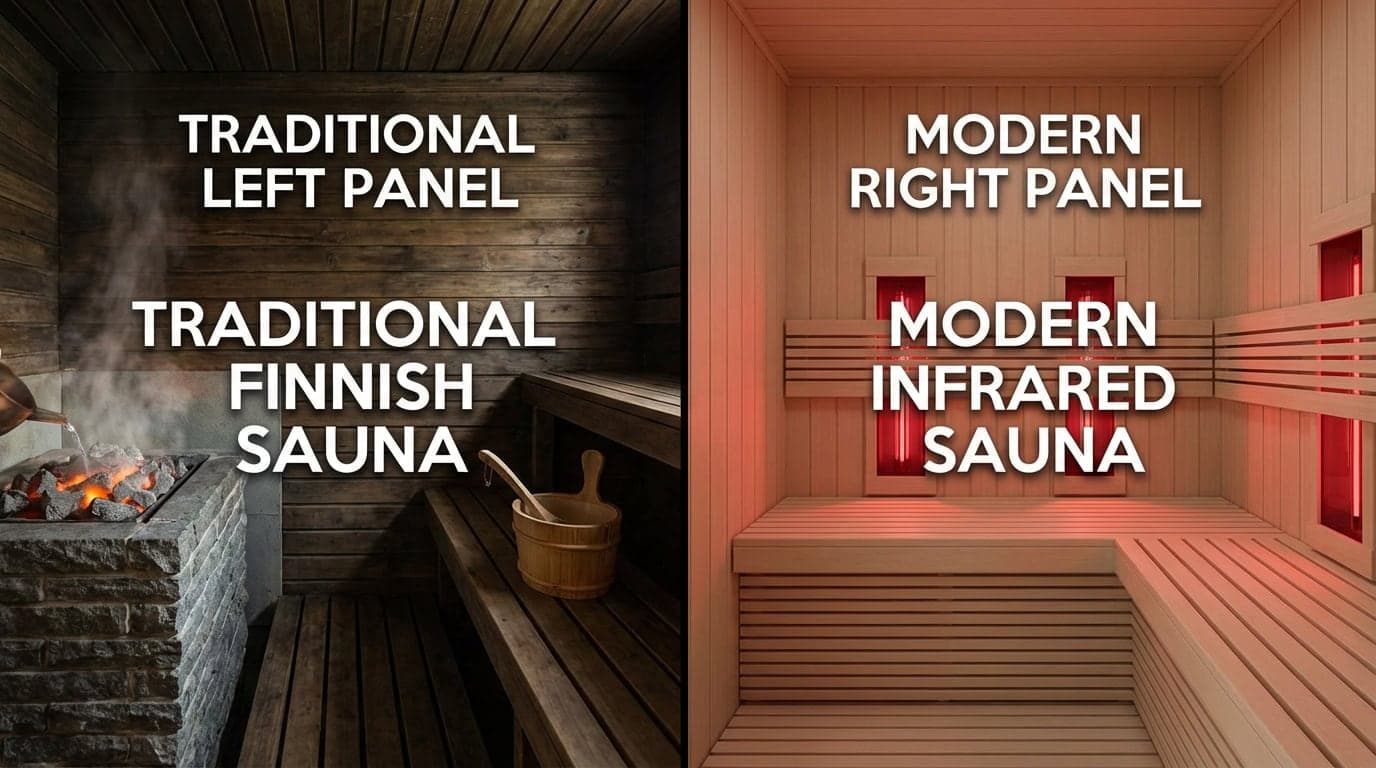
A traditional Finnish sauna heats the air around you to temperatures between 150 and 195 degrees Fahrenheit. Hot rocks or an electric heater warms the air, and that air then heats your body from the outside in. You can pour water on the rocks to create steam (called loyly in Finnish), which increases humidity and makes the heat feel more intense.
The experience is immersive. The air itself feels heavy and hot. Your skin heats first, then your muscles, then eventually your core temperature rises. Sessions typically last 15 to 20 minutes, followed by a cooling period.
How Infrared Saunas Work
Infrared saunas use light panels that emit infrared radiation, typically in the far-infrared spectrum. This light penetrates your skin and heats your tissue directly, similar to how sunlight warms you even on a cool day. The air temperature stays much lower, typically 120 to 140 degrees Fahrenheit.
The experience feels gentler. You are warm, you sweat, but the air around you remains breathable. Because the heat targets your body directly rather than heating the air, some users find they can tolerate longer sessions.
The Core Distinction
Traditional saunas heat the environment; you heat up as a consequence. Infrared saunas heat you directly; the environment stays relatively cool. Neither approach is inherently superior. They simply achieve elevated body temperature through different mechanisms.
The Honest Comparison: What Actually Matters
Here is a side-by-side breakdown of the factors that will affect your daily experience and long-term satisfaction.
| Factor | Traditional Sauna | Infrared Sauna |
|---|---|---|
| Operating Temperature | 150-195 degrees F | 120-140 degrees F |
| Heat-Up Time | 30-45 minutes | 10-20 minutes |
| Session Length | 15-20 minutes typical | 20-45 minutes typical |
| Purchase Cost | $3,000-$12,000+ | $1,500-$6,000 |
| Installation Cost | $1,000-$3,000+ | $0-$500 |
| Electrical Requirement | 220V/240V dedicated circuit | 110V standard outlet (most models) |
| Monthly Operating Cost | $15-$30 | $5-$15 |
| Humidity Control | Yes (water on rocks) | No |
| Space Required | Larger footprint typical | More compact options available |
| Ventilation Needed | Yes, especially with steam | Minimal |
Temperature and Experience
Traditional saunas deliver an intense, enveloping heat. The high air temperature means your lungs feel the warmth with every breath. For many, this intensity is the entire point. Finnish sauna culture has revolved around this experience for centuries.
Infrared saunas provide a more moderate sensation. You sweat without feeling like you are inside an oven. People who find high heat uncomfortable or who have respiratory sensitivities often prefer this gentler approach.
Installation Reality Check
This is where practical considerations often override preferences. Traditional saunas require a 220V or 240V dedicated electrical circuit. Most homes do not have spare 220V circuits in convenient locations. Installing one costs between $250 and $900, assuming your electrical panel can handle the additional load. Panel upgrades, if needed, cost $700 to $3,000.
Most infrared saunas plug into a standard 110V outlet. You can set one up in a spare room, basement, or garage without calling an electrician. For renters or anyone who might move, this flexibility matters significantly.
Traditional saunas also require ventilation to manage humidity and prevent moisture damage. A basic exhaust system costs $550 to $1,200. Infrared saunas produce minimal humidity and typically need no special ventilation.
Long-Term Costs
A traditional sauna heater draws 4.5 to 8 kilowatts. Heating from cold takes 30 to 45 minutes, so each session uses substantial electricity. Expect monthly costs of $15 to $30 with regular use.
Infrared saunas draw 1.5 to 3 kilowatts and heat up in 10 to 20 minutes. Monthly operating costs typically run $5 to $15 even with daily use.
What the Research Actually Says
This is where the conversation becomes nuanced. Both sauna types have research supporting their health benefits, but the quality and quantity of evidence differs substantially.
The Finnish Studies: Traditional Sauna Evidence
The strongest sauna research comes from Finland, where traditional saunas are ubiquitous. The Kuopio Ischemic Heart Disease Risk Factor Study followed 2,315 middle-aged Finnish men for over 20 years and produced remarkable findings.
Men who used a sauna 4 to 7 times per week had a 40 percent lower risk of all-cause mortality compared to those who used a sauna once per week. Sudden cardiac death risk dropped by 63 percent in the frequent-use group. Sessions lasting more than 19 minutes showed stronger benefits than shorter sessions.
A 2022 follow-up study found that frequent sauna bathing appears to offset the increased mortality risk associated with high inflammation markers. The research suggests potential cardiovascular conditioning effects, with heart rates during sauna sessions matching those achieved during moderate-intensity exercise.
These are observational studies, not randomized controlled trials. They cannot prove causation. But the consistency and magnitude of the findings across multiple studies is notable.
Infrared Sauna Evidence
Research on infrared saunas is growing but remains more limited. A 2009 review of far-infrared sauna studies for cardiovascular risk factors found promising results but noted significant limitations: small sample sizes, short durations, and many studies conducted by the same research group.
Specific findings include improved vascular function, reduced blood pressure in type 2 diabetics (systolic blood pressure decreased by 6.4 mmHg in one study), and improvements in chronic heart failure symptoms. Studies on infrared saunas for depression, chronic pain, and chronic fatigue syndrome have shown positive results.
A 2021 crossover trial compared infrared sauna bathing to exercise in healthy women and found similar improvements in blood pressure, arterial stiffness, and heart rate variability. This suggests infrared saunas may provide exercise-like cardiovascular benefits.
The Honest Assessment
Here is what you need to understand: the 20-year Finnish longevity studies used traditional saunas at temperatures of 80 to 100 degrees Celsius (176 to 212 degrees Fahrenheit). We cannot automatically assume those results apply to infrared saunas operating at lower temperatures.
However, the mechanism appears similar: both types elevate core body temperature, trigger heat shock protein production, increase heart rate, and stimulate cardiovascular adaptation. The question is whether the lower temperatures in infrared saunas produce equivalent effects over time.
A November 2025 study from the University of Oregon compared traditional saunas, infrared saunas, and hot tubs. Researchers found that only hot water immersion produced measurable changes in inflammatory markers, though all three methods raised core temperature and showed cardiovascular responses.
The honest answer: traditional saunas have stronger research backing, particularly for longevity outcomes. Infrared saunas show promise and have specific clinical applications, but the long-term population studies do not yet exist.
The Decision Framework: Which Is Right for You?
Rather than declaring a winner, let us match each sauna type to specific situations.
Choose a Traditional Sauna If:
- You have access to 220V power or can install it affordably
- You own your home and plan to stay long-term
- You want the authentic Finnish sauna experience with loyly
- You prioritize the longevity research as a primary motivator
- You have adequate space (typically 6x6 feet minimum for 2 people)
- Your budget accommodates $4,000 to $12,000 total investment
- You enjoy intense heat and find it meditative
Choose an Infrared Sauna If:
- You rent or may move within a few years
- You have limited space or no access to 220V power
- You find extreme heat uncomfortable or have respiratory concerns
- Your budget is $1,500 to $5,000
- You want minimal installation complexity
- Energy efficiency and operating costs matter to you
- You prefer longer, gentler sessions
Consider Both If:
- You have access to a gym or spa with a traditional sauna and want infrared at home
- You travel frequently and want a portable option in addition to a permanent installation
- Some newer hybrid saunas offer both traditional and infrared heating elements
The Gym Strategy
If you are currently using whatever sauna your gym provides, keep using it. The best sauna is the one you actually use regularly. The Finnish research showed frequency mattered more than anything: 4 to 7 sessions per week produced better outcomes than 1 session per week, regardless of fancy features.
Quick Buying Tips for Each Type
What to Look for in a Traditional Sauna
Heater Quality: The heater is the heart of the system. Look for established brands like Harvia, Helo, or Tylo. A quality 6kW to 8kW heater suits most home saunas.
Wood Type: Canadian hemlock, Nordic spruce, and cedar are popular choices. Cedar offers natural moisture resistance and pleasant aroma. Avoid chemically treated wood.
Rock Capacity: More rocks means more steam when you pour water. Look for heaters that hold 30 to 50 pounds of stones.
Insulation: Proper insulation maintains temperature and reduces operating costs. Look for R-6 or higher in walls and ceiling.
Ventilation Design: Ensure the design includes intake near the floor and exhaust near the ceiling. This creates proper air circulation.
What to Look for in an Infrared Sauna
Emitter Type: Far-infrared carbon panels are standard and effective. Ceramic emitters heat faster but may create hot spots. Some premium models offer full-spectrum (near, mid, and far-infrared).
EMF Levels: Electromagnetic field emissions should be low. Look for third-party EMF testing with levels under 3mG (milligauss) at body distance.
Wood Quality: Same principles as traditional saunas. Avoid particle board or low-quality materials that may off-gas.
Heater Placement: Panels should surround you on multiple sides, not just the back. Front heaters improve even heating.
Warranty: Quality manufacturers offer 5 to 7 years on components and lifetime on the structure.
Red Flags to Avoid
- Extreme claims about detoxification or miracle cures
- Lack of safety certifications (look for ETL, UL, or CSA marks)
- No physical address or unclear manufacturing origin
- Warranties under 3 years on major components
- Pressure sales tactics or "limited time" deals that never expire
- Unusually low prices on premium-sounding specifications
Frequently Asked Questions
Can I get the same health benefits from an infrared sauna as a traditional sauna?
Both types elevate core body temperature and produce cardiovascular responses. However, the long-term longevity studies were conducted using traditional Finnish saunas at high temperatures. We cannot confirm identical outcomes for infrared saunas until similar long-term studies are completed. Current evidence suggests both provide benefits, though potentially through slightly different mechanisms.
Is one type safer than the other?
Neither type presents significant safety risks for healthy adults when used appropriately. Infrared saunas may be more suitable for people who struggle with high heat or have certain respiratory conditions. Both types require attention to hydration and session length.
How often should I use a sauna for health benefits?
The Finnish research showed the strongest benefits at 4 to 7 sessions per week, with session durations of 15 to 20 minutes. Starting with 2 to 3 sessions weekly and gradually increasing frequency is reasonable for beginners.
Can I install an infrared sauna in an apartment?
Yes, many infrared saunas are apartment-friendly. They plug into standard outlets, require no ventilation modifications, and come in compact sizes. Check your lease for any restrictions on space heaters or similar equipment.
Do saunas really help with detoxification?
Sweat is mostly water with small amounts of salt and trace minerals. Your liver and kidneys handle actual detoxification. While saunas produce sweating, they should not be marketed as detoxification devices. The real benefits come from cardiovascular conditioning and stress reduction.
Final Thoughts
The infrared versus traditional sauna debate often generates more heat than light. Both technologies offer legitimate benefits. Both can become valuable parts of a health-focused lifestyle.
Your choice should come down to practical factors: electrical access, space, budget, heat tolerance, and how long you plan to stay in your current home. Do not let marketing claims about one type being superior drive your decision.
If you have the infrastructure and budget for a traditional sauna and you enjoy intense heat, go traditional. If you want simplicity, lower costs, and gentler sessions, go infrared. If you have access to a gym sauna, start there before investing in anything.
The best sauna is the one you will actually use regularly.
Want more evidence-based sauna guidance? Subscribe to our weekly newsletter for research updates, protocol recommendations, and practical tips that skip the hype.